Omar Abdullah Advocates TVK Chief to Prove Majority in TN Assembly
Omar Abdullah calls for Tamil Nadu’s governor to allow TVK leader Vijay a chance to prove majority in the assembly, citing Supreme Court rulings on government formation.
 Admin
0 comments
Admin
0 comments
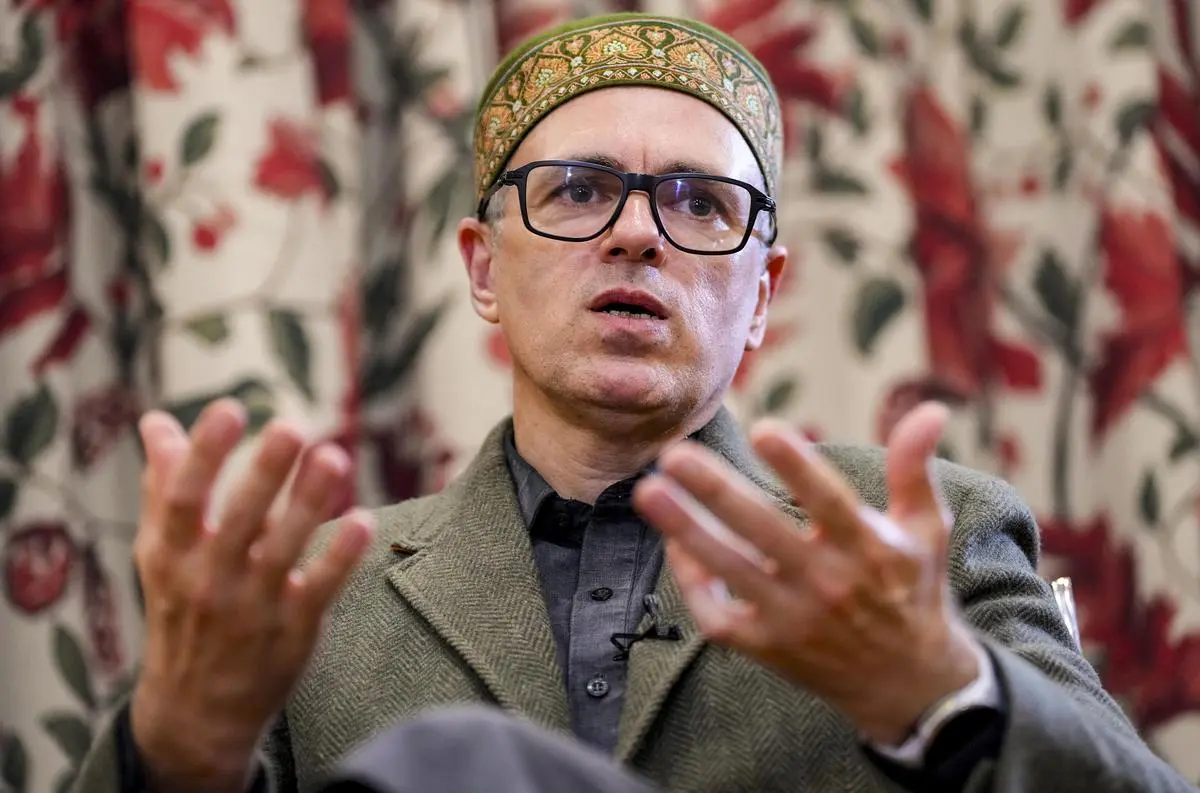
Jammu and Kashmir Chief Minister Omar Abdullah voiced strong support on Friday for Tamil Nadu’s Tamilaga Vettri Kazhagam (TVK) leader Vijay to be given an opportunity to form the government. His comments come after Tamil Nadu Governor Rajendra Vishwanath Arlekar denied Vijay’s request to form a government, citing insufficient numbers in the assembly.
Abdullah argued that halting government formation contravenes numerous Supreme Court judgments advocating for the single largest party to be invited to form the government and subsequently prove their majority on the assembly floor.
During a press briefing, Abdullah stated, “If we see the Supreme Court judgment, then there should be no President’s rule. After elections, the single largest party should be invited to govern and prove their majority.” He emphasized that the judiciary supports this approach, which fosters democratic processes in governance.
TVK has indeed fallen short of a simple majority required to form the state government. Currently, in the 234-member Tamil Nadu Assembly, a party needs 118 seats for a simple majority. Vijay’s party, despite receiving backing from the Congress, which controls five MLAs, remains several seats shy of achieving this threshold.
Further illustrating his point, Abdullah recalled the historical context where former Prime Minister A B Vajpayee formed a government for just 13 days, similarly failing to secure the requisite majority. He remarked, “The President of India did not hesitate to invite him to form the government, demonstrating the importance of allowing a party to attempt a government formation.”
In the landscape of Tamil Nadu’s politics, Abdullah’s assertions highlight concerns regarding the application of democratic principles when interpreting electoral outcomes. He suggested that the Tamil Nadu Lok Bhavan lacks justification to impede the political processes defined by the Supreme Court.
“Vijay should be allowed a chance to form the government,” Abdullah continued. “Should he manage to prove his majority in the assembly, he can govern; if he fails, he should resign. This method ensures accountability and adheres to legal precedents.”
The ongoing political discourse underscores the pivotal role of state governors and their authority over government formation in India. Observers urge the Tamil Nadu governor to consider these judicial precedents seriously as they evaluate the legitimacy of government formations.
Experts argue that this incident marks a significant moment in Tamil Nadu’s political landscape, revealing broader themes concerning governance and democratic integrity. As the drama unfolds, stakeholders from various political spectrums will keenly watch how the situation develops in response to Abdullah’s calls.