Omar Abdullah Demands Apology from Nitish Kumar Over Veil Incident
Omar Abdullah calls for Bihar CM Nitish Kumar’s apology to a woman doctor whose veil he pulled down. The incident raises concerns over dignity and conduct.
 Admin
0 comments
Admin
0 comments
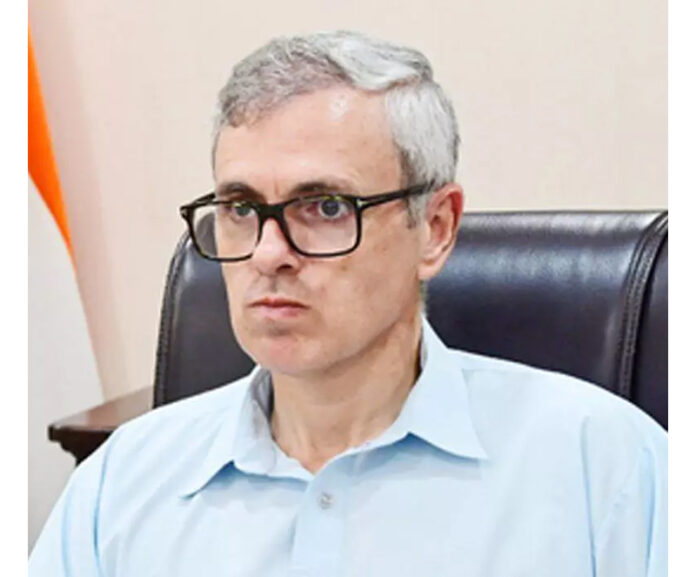
Jammu and Kashmir Chief Minister Omar Abdullah publicly demanded an apology from Bihar Chief Minister Nitish Kumar for an incident involving a woman doctor at a recent government function. This incident has sparked significant controversy following Kumar’s actions during an appointment letter distribution ceremony in Patna on Monday.
During the event at the Bihar Secretariat, Kumar allegedly pulled down the woman’s naqab while questioning, “What is this?” Abdullah strongly criticized this act, labeling it as entirely unacceptable.
“Would you do such an act? I would not,” Abdullah remarked, emphasizing that there is no justification for Kumar’s behavior. Reports indicate that the doctor in question has declined her appointment letter and has chosen not to join the government service.
Moving forward, Abdullah insisted that Kumar should formally apologize to the doctor and encourage her to accept the job offer. The incident has drawn extensive media attention and public outrage.
In his response to Union Minister and BJP leader Giriraj Singh, who defended Kumar, Abdullah pointed out the double standards prevalent in political reactions based on the religion of the individuals involved.
“If a Muslim leader had touched the veil of a Hindu woman in Haryana or Rajasthan, there would have been a huge uproar. But since the woman here is Muslim, the BJP finds nothing wrong,” Abdullah stated, highlighting a concerning trend surrounding public discourse.
He clarified that his stance is not rooted in religious identity but rather in fundamental principles of dignity and respect. “How can anyone touch a woman’s clothes like this? Why did the Chief Minister feel the need to do so?” he probed, calling for Kumar to recognize his mistake and issue an apology.
On the broader political landscape, Abdullah addressed comments made by Congress leader Prithviraj Chavan, which suggested a “total defeat” in the aerial battle against Pakistan during Operation Sindoor. He characterized Chavan’s remarks as personal opinions rather than the official stance of the Congress party. Abdullah reaffirmed that the opposition maintained a united front with the government and defense forces following the recent terrorist attack in Pahalgam.
While in Patna for the 11th edition of the India’s International Movement to Unite Nations (IIMUN) Role Model Series, Abdullah discussed the concept of the “idea of India.” He reaffirmed Jammu and Kashmir’s historical decision to accede to India, despite the region’s majority Muslim population.
“I come from a Muslim-majority State which could have gone with Pakistan at the time of Partition. Yet Jammu and Kashmir chose India. That choice defines the idea of India we must protect,” he expressed, underscoring the importance of this narrative in contemporary discussions.
Abdullah acknowledged diverse interpretations of the idea while promoting democratic values that allow for debate and dissent, despite some developments causing him concern.
He highlighted controversies surrounding medical college admissions and sports selections in Jammu and Kashmir, criticizing how discussions often revolve around religious identity.
Recent debates ignited over admission statistics at the Vaishno Devi Medical College, which saw 42 out of 50 students in its first MBBS batch coming from a Muslim background, and the composition of the J&K football team for the Santosh Trophy. Abdullah remarked, “The only balance that should matter is between the talented and the untalented.”
He concluded by affirming his vision for India, where meritocracy prevails over identity politics. “The India I want for our children is one where merit alone decides how far they go—nothing else. If someone passes the exam or plays football well, their religion should be irrelevant,” Abdullah stated, advocating for a future guided by capability rather than communal affiliations.