Supreme Court Refers Anticipatory Bail Pleas to Three-Judge Bench
Supreme Court refers the critical question of direct anticipatory bail pleas in High Courts to a three-judge bench, highlighting concerns over practice in Kerala High Court.
 Admin
0 comments
Admin
0 comments
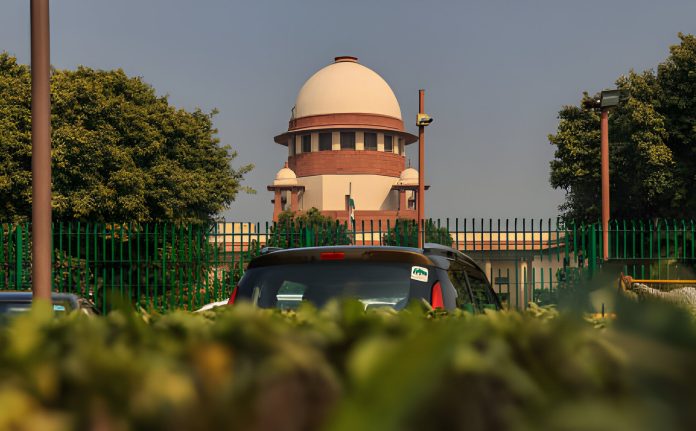
The Supreme Court of India, on Wednesday, referred the issue of allowing direct anticipatory bail pleas in High Courts to a three-judge bench. This decision addresses whether litigants should seek bail directly from high courts or follow the necessary procedure of approaching the sessions court first.
A bench comprising Justices Vikram Nath and Sandeep Mehta stated that the matter warrants deliberation by a larger bench once constituted. “This matter requires to be heard by a three-judge bench,” the court affirmed, indicating the importance of the issue.
Previously, the apex court appointed senior advocate Siddharth Luthra as amicus curiae to assist in navigating this complex legal query.
The Supreme Court emphasized its concerns regarding the “regular practice” of the Kerala High Court, which frequently entertains anticipatory bail applications without litigants first approaching the sessions court. During earlier hearings, the bench questioned, “One issue that is bothering us is that in the Kerala High Court, anticipatory bail applications are regularly entertained directly. Why is that so?”
The Supreme Court referred to provisions outlined in the old Code of Criminal Procedure and the newly instituted Bharatiya Nagarik Suraksha Sanhita (BNSS), 2023, underscoring a clear hierarchical structure regarding bail applications. Specifically, Section 482 of BNSS provides directives for granting bail to individuals fearing arrest.
Critical Observations on Kerala High Court Practices
The bench noted that such direct petitions are unique to the Kerala High Court, stating, “It doesn’t happen in any other state. Only in the Kerala High Court… applications for anticipatory bail are regularly entertained directly.” This distinction raised eyebrows and instigated further examination of established legal protocols.
The discussion emerged while hearing a plea from two men contesting a Kerala High Court order that denied them anticipatory bail. The petitioners had directly approached the high court, bypassing the sessions court, raising questions about procedural integrity.
The Supreme Court pointed out that this practice might deprive the courts of critical factual records typically reviewed by a sessions court. The bench commented, “We are inclined to consider whether the option to approach the high court is a matter of choice for the accused or whether it should be mandatory to first go to the sessions court.”
The top court has issued a notice to the Kerala High Court, seeking a formal response through its Registrar General regarding this pressing issue. These developments indicate a pivotal moment in the legal landscape concerning anticipatory bail, with implications that could alter how bail applications are made across the country.