


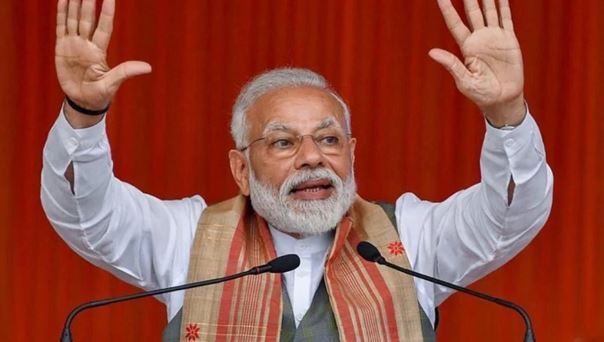
In his first term as the prime minister, Narendra Modi had tough time in communicating with the Opposition. Trust deficit between the ruling and the Opposition parties became more evident than before.
Except the Goods and Services Tax (GST) legislation, no major policy or executive decision of the Modi government has got any support from the Opposition camp. The Citizenship Amendment Act (CAA) has brought the Opposition and the Modi government on a collision path.
States have been passing resolutions (Kerala, Punjab and Rajasthan, plus West Bengal) against the CAA. Kerala has moved the Supreme Court challenging the constitutional validity of the CAA.
Besides CAA, another bone of contention between the Modi government and the Opposition-ruled states seems to be the National Investigation Agency (NIA). A petition by Congress-ruled Chhattisgarh is already pending in the Supreme Court against the NIA law. Maharashtra, too, is weighing its options against the Centre over NIA’s jurisdiction.
But before we have a look at what is happening in the case of CAA and NPR (National Population Register), let us see how Modi versus Opposition build up has taken place.
ASSERTIVE MODI VS EDGY OPPOSITION
Smarting under Prime Minister Narendra Modi’s capacity to pull votes for his Bharatiya Janata Party since 2014, the Opposition parties have felt marginalised in national politics. The first sign of turning tides appeared in 2018 when the Congress captured three of the Hindi heartland states – the high sea of Modi wave — from the BJP.
The loss of Rajasthan, Madhya Pradesh and Chhattisgarh elections jolted the BJP but 2019 Lok Sabha election showed that the Modi wave might actually have become more nuanced and focused. Though the BJP’s public ratings appeared down, the party won 303 Lok Sabha seats riding on the Modi wave.
This was also the election when the Opposition looked to set poll narrative with then Congress president Rahul Gandhi pitching slogans such as chowkidar chor hai (the watchman is a thief). In six months from a rather surprise majority in the Lok Sabha, the BJP failed to win two more Hindi states of Haryana and Jharkhand, and lost one that it had won with its oldest alliance partner Shiv Sena.
It managed to stay in power, striking a deal with fledgling Jannayak Janata Party of Dushyant Chautala, in Haryana but was comprehensively routed in Jharkhand. It emerged as the largest party in Maharashtra but ended up occupying the Opposition benches despite deciding to go ahead with a questionable and hasty swearing-in.
Further, the Modi government’s decision to cease operation of Article 370 in Jammu and Kashmir and bifurcating it into two Union Territories saw the Opposition suddenly raising the clamour of its opposition. While petitions were still piling up in the Supreme Court over the Article 370 move, the Modi government rolled out another promise mentioned – but taken “lightly” by rivals – in its manifesto: the Citizenship Amendment Act.
The CAA provides for fast forwarding citizenship to non-Muslim illegal immigrants from Bangladesh, Pakistan and Afghanistan who had reached India before 2015. Exclusion of Muslims from the ambit of the amendment to the citizenship law gave the Opposition parties a fresh shot in the arm.
It has become the rallying point to target the central government, particularly PM Modi. His comments – rioters in anti-CAA protests could be identified with their clothes — during campaign for Jharkhand Assembly election helped the Opposition build a counter-narrative against PM Modi with the CAA in the background.
In the immediate impact, Bengal and Kerala – both non-Congress governments – halted the ongoing process of NPR update. Some others – Congress-ruled – followed the suit. Since then, there have been reports from Bengal, Rajasthan and even Bihar – a BJP-led NDA-ruled state – that surveyors have been heckled and assaulted for or on the suspicion of them being NPR workers.
Kerala government has invoked Article 131 while challenging the CAA on the grounds that it violates the right to equality under Article 14, right to life under Article 21 and right to freedom of religion under Article 25.
Article 131 empowers the Supreme Court to settle a dispute between the Centre and states. By invoking this Article, Kerala has categorised the CAA a dispute between the Modi government and the states. It seeks scrapping of the CAA.

